
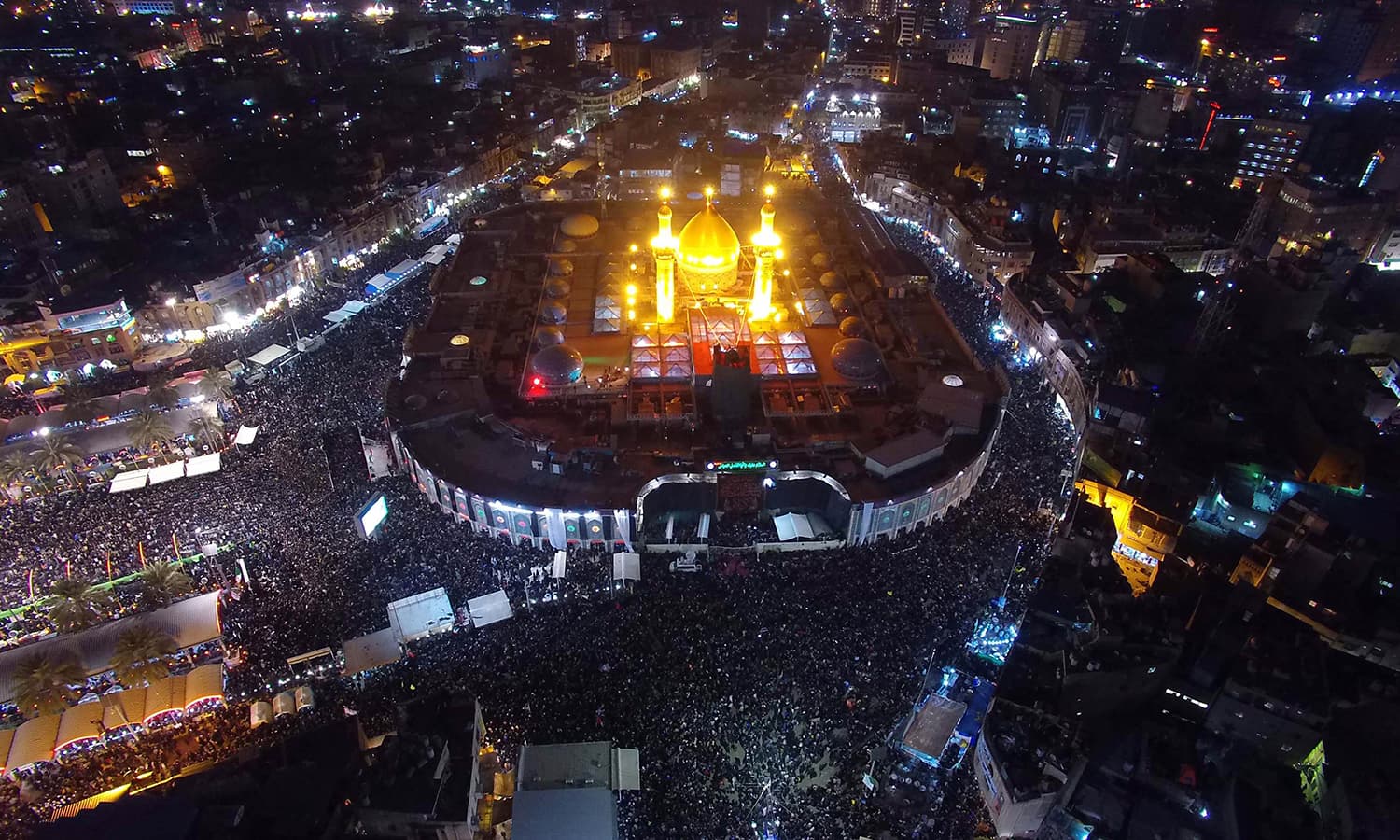
There is a moment, after the long road, when the golden dome first comes into view. For many visitors it is a moment they have carried in their hearts for years.
You may have heard the name of Imam Hussain (AS) since childhood: in the majalis of Muharram, in the voices of your parents, in tears shed far from Karbala. Now you are here, able to offer your salam in person.
Ziyarat in Karbala is an act of remembrance and of loyalty. You come to honour a grandson of the Prophet Muhammad (PBUH) who refused to give allegiance to injustice, and to stand, even briefly, with those who stood with him. People come with very different feelings. Some weep; some feel a deep stillness; some simply feel grateful to have arrived. There is no single right way to feel.
In short: the holy sites of Karbala
Most visits centre on two shrines: the Shrine of Imam Hussain (AS) and the Shrine of al-Abbas (AS), his brother and standard-bearer. They face each other across Bayn al-Haramayn, the open walk between them. Close by are al-Mukhayyam, where the camp of Imam Hussain’s (AS) family is remembered, and Tal al-Zainabiyya, associated with Lady Zaynab (AS).
This guide walks through each place, suggests a simple order, points you to the ziyarat texts on Ziyarat Guide, and links to ready-made plans you can download before you travel.
Visiting the Shrine of Imam Hussain (AS)
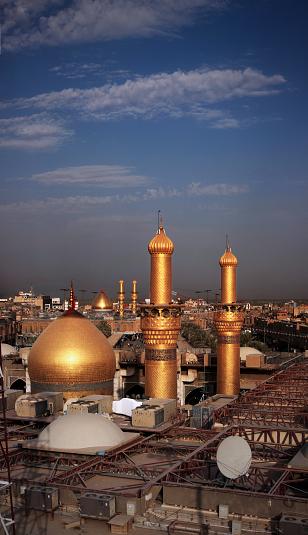
Imam Hussain (AS) was the grandson of the Prophet Muhammad (PBUH) and the son of Imam Ali (AS) and Lady Fatima (AS). In 61 AH (680 CE) he was killed at Karbala on the day of Ashura, together with members of his family and his companions, after refusing to give allegiance to a ruler he considered unjust.
His shrine stands over his grave. For Shia Muslims, visiting him is a way of honouring him, mourning what happened here, and renewing a commitment to stand for what is right.
Approaching the visit
- Pause before entering. Take a breath. Many visitors stop at the threshold to ask permission to enter and gather their thoughts.
- Offer your salam. Greet the Imam simply and sincerely, in Arabic or in your own language.
- Make dua. Pray for yourself, your family, those who asked you to remember them, and those who have passed away.
- Sit in reflection. Find a quiet corner and stay a while. There is no need to hurry.
If you would like to know the Imam better before you arrive, read about his family and the lessons of his life or the full guide to his shrine.
Visiting al-Abbas (AS), the standard-bearer
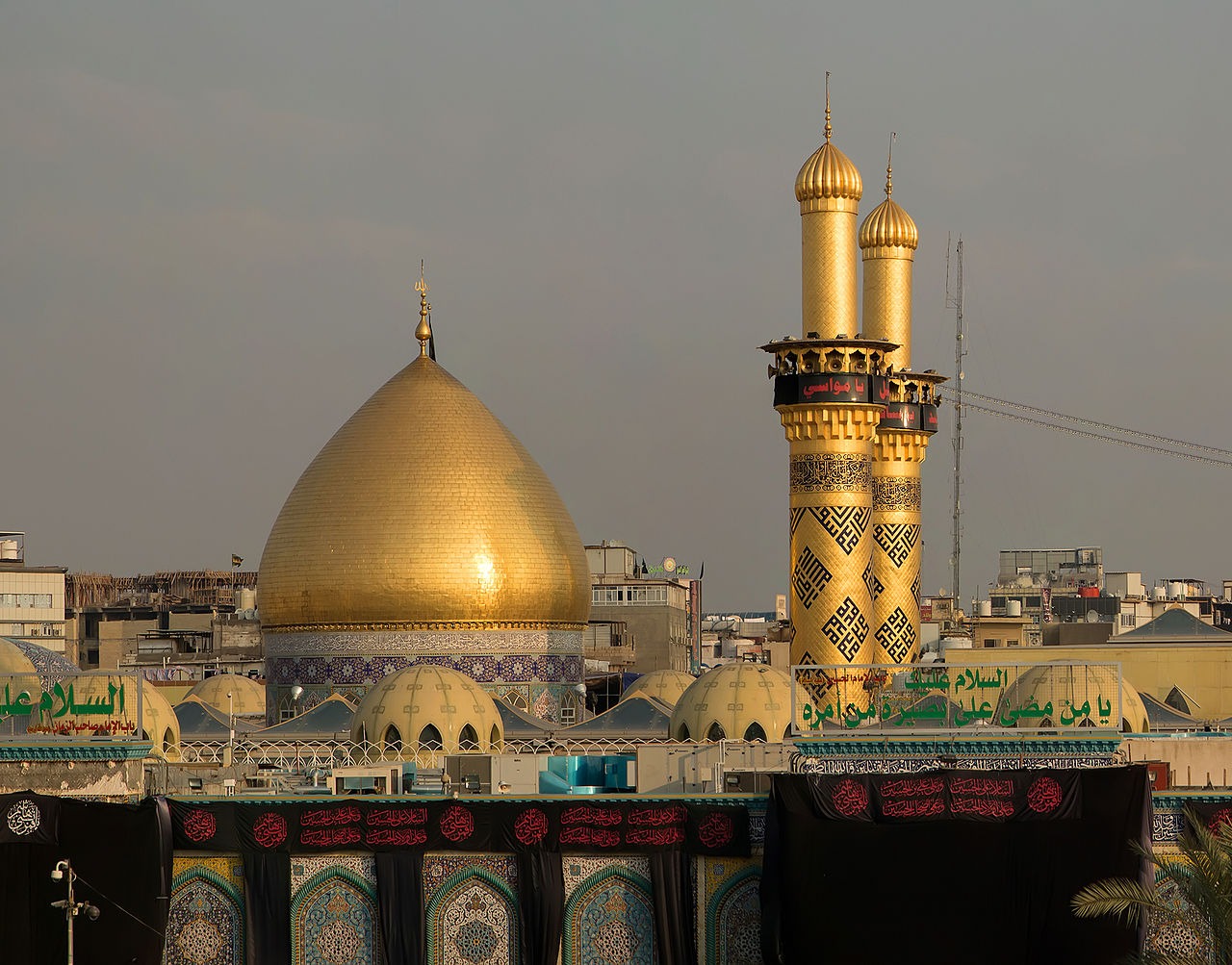
Al-Abbas ibn Ali (AS) was a son of Imam Ali (AS) and of Fatima bint Hizam, remembered as Umm al-Banin, the “mother of sons”. Imam Hussain (AS) was his half-brother. He is widely known as Abu al-Fadl.
At Karbala he carried the standard of Imam Hussain’s (AS) small company, and he was killed there on the day of Ashura. Accounts describe him going towards the Euphrates while the camp was cut off from water; the details of how he was killed vary between the early histories and later devotional narratives.
What every account shares is his loyalty. He stayed beside his brother when leaving was possible. Many visitors find that this is what moves them most at his shrine: the quiet strength of someone who chose to serve rather than to be seen.
A question to carry with you: who has stood by me when it was difficult, and where am I being asked to stay loyal to what is right?
Read the guide to the Shrine of al-Abbas (AS) and his ziyarat.
Walking through Bayn al-Haramayn
Bayn al-Haramayn (بين الحرمين) means “between the two sanctuaries”. It is the open space, roughly 380 metres long, that joins the Shrine of Imam Hussain (AS) with the Shrine of al-Abbas (AS).
It was not always open. Narrow alleys, houses and shops once filled the area between the shrines; the wide walkway visitors know today was cleared and developed in recent decades. During Muharram and Arbaeen it fills with people walking between the two shrines.
There is no prescribed ritual for this walk. You can simply use it as a pause between two visits: a few minutes to remember the brothers, to send salawat, or to walk in silence with the domes on either side.
Other holy places in Karbala
Al-Mukhayyam (the Camp)
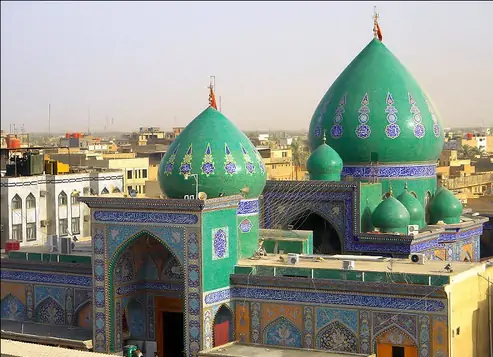
South-west of the Shrine of Imam Hussain (AS), al-Mukhayyam marks where the tents of the Imam’s family and companions are remembered as having stood. Historical reports describe the tents being plundered and burned after the battle. The building on the site today was first raised centuries later.
About al-Mukhayyam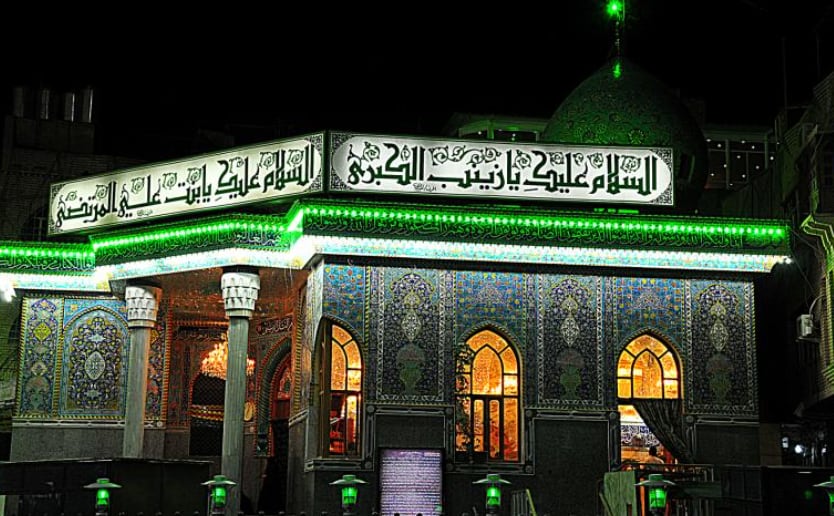
Tal al-Zainabiyya
A small raised site near the Shrine of Imam Hussain (AS). By tradition, it is where Lady Zaynab (AS) stood to watch what was happening to her brother on the day of Ashura. Visitors come to remember her patience and courage.
About Tal al-ZainabiyyaA simple suggested ziyarat
If this is your first visit, or you have only a few hours, this order keeps things calm and clear. Each step opens its guide.
- 1Shrine of Imam Hussain (AS)العتبة الحسينية المقدسةBegin with salam to the grandson of the Prophet (PBUH).
- 2Bayn al-Haramaynبين الحرمينThe open walk between the two shrines.
- 3Shrine of al-Abbas (AS)العتبة العباسية المقدسةGreet the standard-bearer and brother of the Imam.
For a longer visit, add:
This is a suggested order for an unhurried visit, not a religious requirement.
Map preview
See all five holy sites on the Karbala map
Numbered pins, walking distances and directions, with each site one tap away.
Download a ready-made plan
Each PDF includes a map, the stops in order, a short checklist and a page of Arabic names to show your driver. You can also browse every plan or build your own in My Trip, no dates required.
1 suggested day
Karbala essentials
The two shrines and Bayn al-Haramayn, in a clear order with Arabic names for your driver.
2 suggested days
Karbala at a gentler pace
Day one for the two shrines; day two for al-Mukhayyam, Tal al-Zainabiyya and rest.
What to read and recite
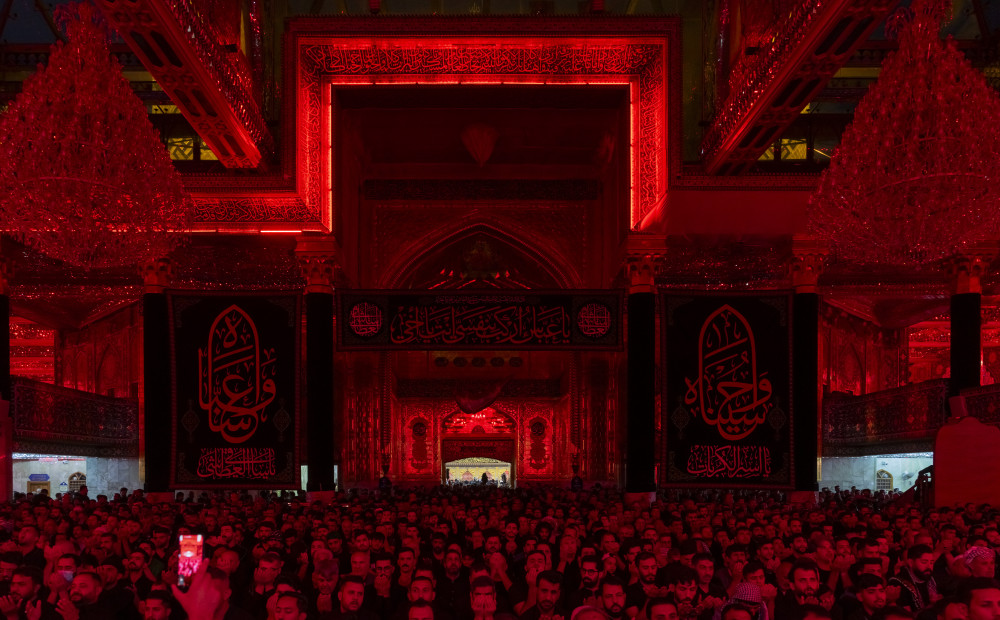
There is no single required sequence of recitation. Many visitors read one ziyarat at each shrine, then sit with their own duas. These readers are on Ziyarat Guide:
- Open the reader
Ziyarat Warithزيارة وارث
A ziyarat of Imam Hussain (AS) that greets him as the inheritor of the prophets before him. Many visitors read it at his shrine.
Arabic with transliteration · English linked on WikiShia
- Open the reader
Ziyarat Ashuraزيارة عاشوراء
A ziyarat of remembrance and grief for Imam Hussain (AS) and those martyred with him. It is read at the shrine and from far away.
Arabic · English linked on WikiShia
- Open the reader
Ziyarat of al-Abbas (AS)زيارة العباس
The ziyarat of al-Abbas (AS) recorded in Kamil al-Ziyarat, honouring his loyalty, sincerity and faithfulness.
Arabic with transliteration · English linked on Al-Islam.org
If you cannot read Arabic, a sincere salam in your own words is always welcome. Browse all duas and ziyarat.
Preparing your heart
A few simple things many visitors find helpful. They are suggestions, not religious rulings.
- Learn about those you are visiting.Even a short reading about Imam Hussain (AS), al-Abbas (AS) and Lady Zaynab (AS) can make the visit feel more personal.
- Bring your own duas.Write down what you want to ask for. In the moment, it is easy to forget.
- Remember loved ones.Keep a list of people who asked you to pray for them, and those who have passed away.
- Allow quiet time.Leave space in your day to simply sit, without a plan or a text to finish.
- Practise patience and kindness.You will share these spaces with many others. Make room, offer a smile, help someone find their way.
For questions of religious practice, such as prayer while travelling, follow the guidance of the scholar (marjaʿ) you follow.
Travelling with family or visiting for the first time
A first ziyarat to Karbala does not need to include everything. A visit that feels unhurried is often the one you remember most.
- Choose a few meaningful stops rather than trying to see every site.
- Leave time to rest between visits, especially with children or older relatives.
- Keep the Arabic names of each destination ready to show a driver.
- Download your plan before you travel, so it is there when you need it.
For practical notes on arriving for the first time, read First time visiting Karbala: what to expect and how to prepare, or see the Karbala destination guide.
Carry Karbala home with you
The visit ends, but what you saw and felt does not have to. Karbala is remembered for a stand against injustice, and that remembrance can live on in small, everyday choices.
Be compassionate with people who are struggling. Be honest when it costs you something. Be generous with your time and what you have. Notice the people who are overlooked, and help them. In this way, the lessons of Karbala go home with you.
Hearts Connected
Add your light
Your journey to Karbala can become part of a connection that reaches across the world. Add your light to Hearts Connected, alongside others inspired by love for the Prophet Muhammad (PBUH) and the Ahlulbayt (AS).
All you need is a first name; email is optional. It is a personal gesture of connection, not part of the ziyarat itself.
Add your light — join Hearts ConnectedFrom Karbala, hearts connect across the world.
Questions about visiting Karbala
What are the main holy sites in Karbala?
The heart of Karbala is the Shrine of Imam Hussain (AS) and the Shrine of al-Abbas (AS), joined by the open walkway of Bayn al-Haramayn. Many visitors also go to al-Mukhayyam, where the camp of Imam Hussain’s (AS) family is remembered, and Tal al-Zainabiyya, associated with Lady Zaynab (AS). All five are close together in central Karbala.
What is Bayn al-Haramayn?
Bayn al-Haramayn means “between the two sanctuaries”. It is the open space of roughly 380 metres between the shrines of Imam Hussain (AS) and al-Abbas (AS). Visitors walk it to go from one shrine to the other, and many use the walk for quiet remembrance.
Which ziyarat texts can I read in Karbala?
Visitors commonly read Ziyarat Warith and Ziyarat Ashura for Imam Hussain (AS), and the Ziyarat of al-Abbas (AS) at his shrine. Ziyarat Guide has readers for all three. You can also simply offer salam and pray in your own words.
How can I plan my first visit?
Keep it simple: begin at the Shrine of Imam Hussain (AS), walk through Bayn al-Haramayn, then visit al-Abbas (AS). Add al-Mukhayyam and Tal al-Zainabiyya if you have time. Download a plan beforehand and keep the Arabic place names to show your driver.
Can I download a Karbala ziyarat itinerary?
Yes. “Karbala essentials” covers the two shrines in one day, and “Karbala at a gentler pace” spreads the holy sites over two days. Each PDF includes a map, the stops in order, a short checklist and a page of Arabic names to show your driver.
What is Hearts Connected?
Hearts Connected is a gathering on Ziyarat Guide of people inspired by love for the Prophet Muhammad (PBUH) and the Ahlulbayt (AS). You add your light with just a first name; email is optional. Joining is a personal gesture of connection and is not part of the ziyarat itself.
Sources
- al-Shaykh al-Mufīd, Kitāb al-Irshād, trans. I. K. A. Howard (1981) — The family of al-Abbas (AS) and his role at Karbala.
- The History of al-Ṭabarī, Vol. XIX, trans. I. K. A. Howard (1990) — The events of 61 AH at Karbala.
- Holy Shrine of Imam Hussain (AS), official website (opens in a new tab) — Arabic name of the shrine.
- Holy Shrine of al-Abbas (AS), official website (opens in a new tab) — Arabic name, titles and the shrine today.
- WikiShia, “Bayn al-Haramayn” (opens in a new tab) — Meaning, distance and history of the space.
- WikiShia, “Al-Mukhayyam” (opens in a new tab) — The site of the camp and its later buildings.
- WikiShia, “Al-Tall al-Zaynabi” (opens in a new tab) — The raised site associated with Lady Zaynab (AS).
- Ibn Qūlawayh, Kāmil al-Ziyārāt, ch. 85, on Al-Islam.org (opens in a new tab) — The ziyarat of al-Abbas (AS).