
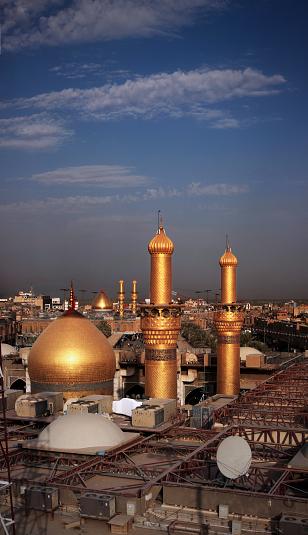
Shrine · Karbala
Shrine of Imam Hussain (as)
The burial place of Imam Hussain (as) in Karbala, and the heart of ziyarat for millions of visitors each year.
Full guide
Preview. Content is awaiting scholarly review. How we check content
Destination · Iraq
The city where Imam Hussain (as) and his companions were killed in 61 AH (680 CE), and where his shrine and the shrine of his brother al-Abbas (as) stand today.
كربلاء
Shrine · Karbala
The burial place of Imam Hussain (as) in Karbala, and the heart of ziyarat for millions of visitors each year.
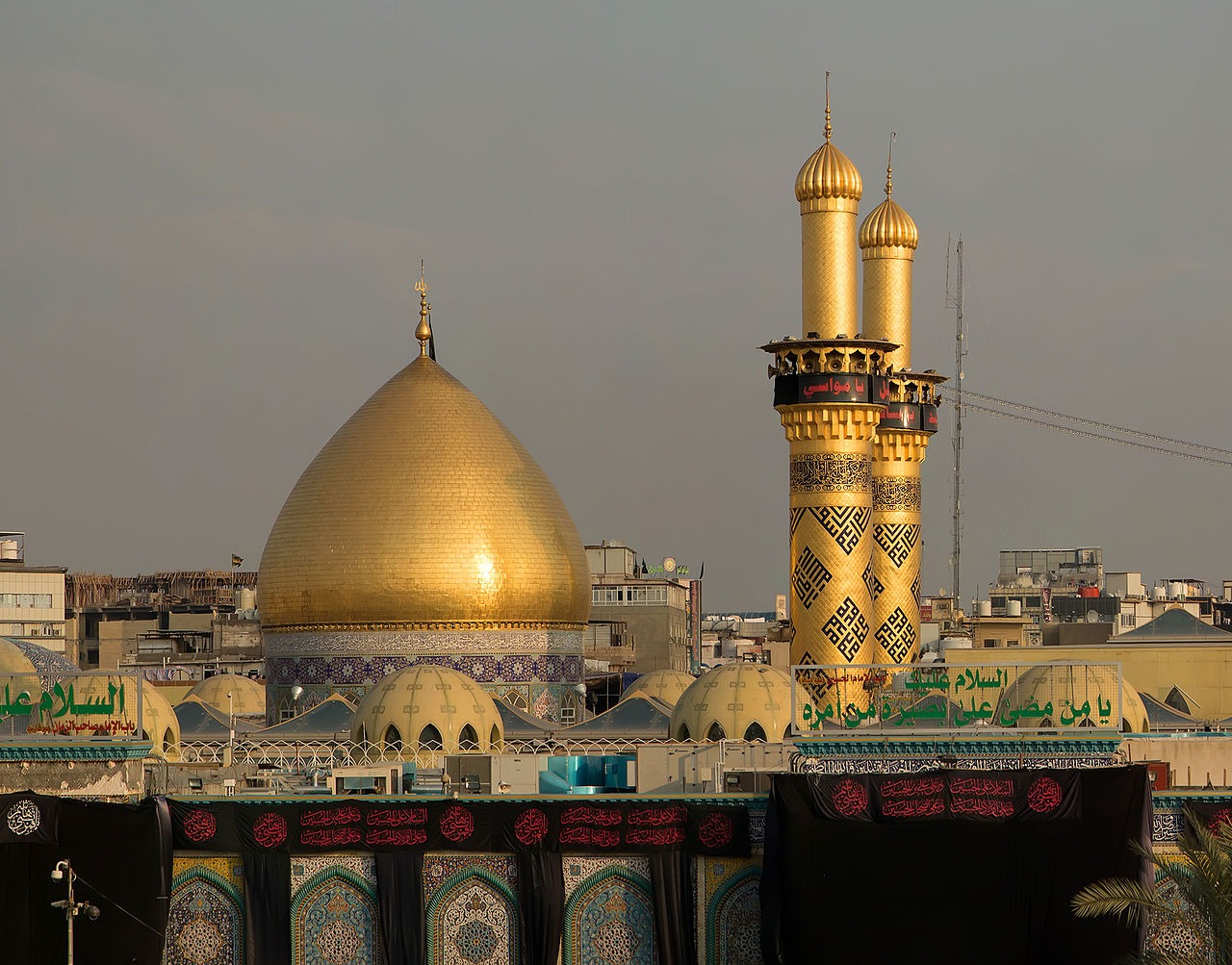
Shrine · Karbala
The shrine of al-Abbas ibn Ali (as), Imam Hussain’s (as) brother and standard-bearer at Karbala, facing Imam Hussain’s shrine across Bayn al-Haramayn.
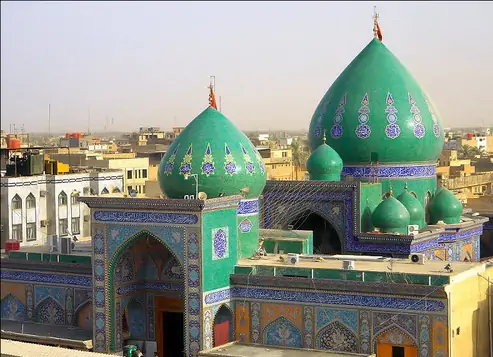
Historic site · Karbala
A site commemorating where the camp of Imam Hussain’s (as) family is traditionally held to have stood before and during the events of Ashura.
Historic site · Karbala
A raised site traditionally associated with Lady Zaynab (as), sister of Imam Hussain (as), during the events of Ashura. Listed under “Key Landmarks” on the existing site.
How to read this guide
Each statement is labelled so you can tell what kind of information it is.
On 10 Muharram 61 AH (680 CE), Imam Hussain ibn Ali, grandson of the Prophet Muhammad (s), was killed at Karbala together with members of his family and companions, after refusing to pledge allegiance to the Umayyad ruler Yazid ibn Muawiya. [The History of al-Ṭabarī] [al-Shaykh al-Mufīd]
In Twelver Shia tradition, visiting the grave of Imam Hussain (as) is regarded as one of the most meritorious devotional acts. Many narrations on this are collected in Kāmil al-Ziyārāt. [Ibn Qūlawayh al-Qummī]
A gentle first visit focused on Imam Hussain (as) and al-Abbas (as), with time to rest.
Day 1: The two shrines
Imam Hussain’s Shrine, Al-Abbas Shrine
Visit Imam Hussain (as) first, then cross Bayn al-Haramayn to al-Abbas (as). Leave time to sit and reflect.
Day 2: Places of Ashura
Al-Mukhayyam, Tal al-Zainabiyya
A slower day. Return to the shrines in the evening if you wish.
A first ziyarat covering all three cities, starting in Najaf and ending in Karbala.
Day 2: Kufa
Kufa Mosque, Muslim ibn Aqil, Masjid al-Sahla
Kufa is close to Najaf. Check travel arrangements locally.
Day 3: Travel to Karbala
Travel by road, then visit Imam Hussain (as) once you have rested.
Spotted an error? Let us know. You can also read how we check content.